Rhode Island may be the smallest state, but it gives couples an incredible range of places to celebrate. You can have cocktails beside Newport Harbor, dinner inside a historic mansion, dancing in the heart of Providence, a tented reception on a Bristol estate, or a full wedding weekend on Block Island.
After photographing wedding receptions in RI from Newport to Providence, Bristol, and Block Island, I have learned that the best reception space is not simply the one that looks the most impressive when it is empty. It is the one that fits your guest count, supports the kind of party you want, and lets people move naturally through the night.
Here is what I would pay attention to before signing a venue contract.
Start With the Reception You Actually Want
Before comparing chandeliers, harbor views, or table settings, picture how you want the room to feel once everyone is inside it.
Do you want a packed dance floor where almost everyone stays close to the action? A relaxed dinner with room for people to wander outside? A live band and a large stage? A tented celebration that keeps guests connected to the landscape? Those choices matter because two beautiful venues can create completely different experiences.
Rhode Island has coastal venues, historic mansions, modern ballrooms, farms, tents, restaurants, and urban spaces. That variety is one of the state’s strengths, but it also means couples should choose for the experience, not only the view. If you are still comparing regions and venue styles, my guide to Newport wedding venues is a useful place to begin.
Choose Cozy, Not Cramped
The strongest reception rooms find a balance. They feel cozy enough that guests remain connected, but not so tight that dinner service, conversation, and dancing happen on top of one another.
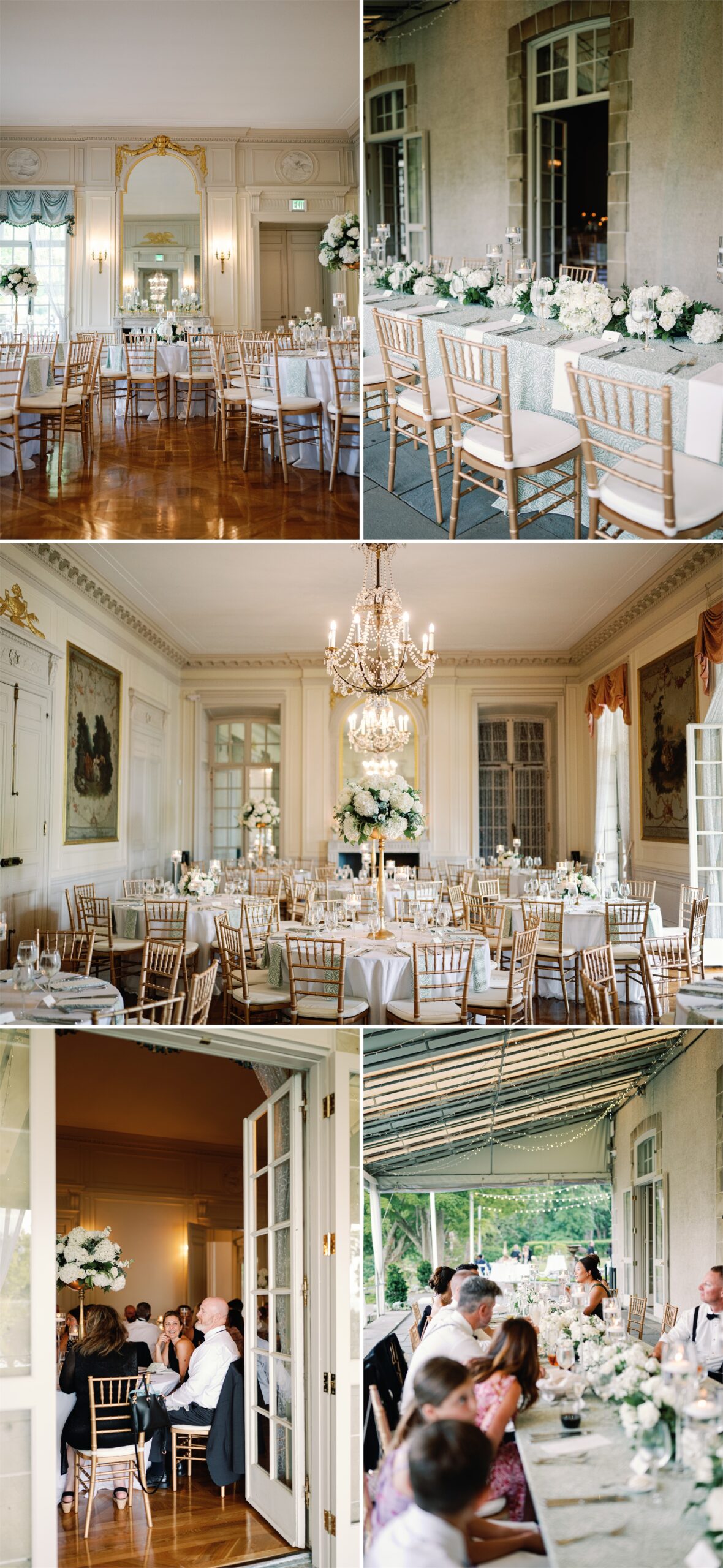
Guest count changes everything. A room that feels warm and energetic with 100 people may feel uncomfortable with 200. The reverse is true too. A very large room can make a smaller wedding feel scattered if tables are spaced too far apart or the dance floor sits away from the guests.
When you tour a venue, do not ask only for its maximum capacity. Ask to see a floor plan for a wedding close to your guest count and entertainment setup. A maximum-capacity layout may leave little room for a band, a larger dance floor, lounge furniture, or the table design you have in mind.
The Dance Floor Can Make or Break the Room
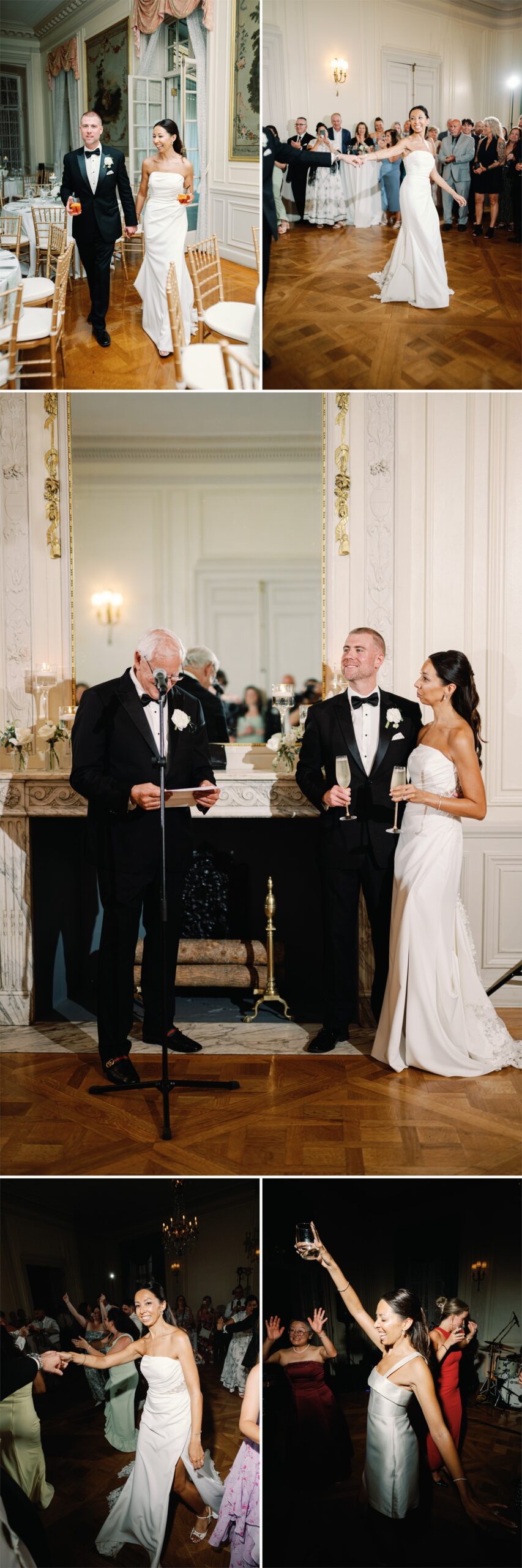
The dance floor should feel like the center of the reception, not an area guests have to search for.
Its relationship to the tables, bar, restrooms, and entertainment setup has a direct effect on the party. If someone has to leave the dance floor and weave through a sea of tables every time they want a drink or need the restroom, it becomes much easier for the energy to break apart. If older guests cannot see the first dance, parent dances, or toasts from their seats, they can feel separated from some of the most important moments of the night.
Look for a layout where guests can move easily without cutting through the middle of dinner service or interrupting the dance floor. Ideally, the room should let people step away for a drink or conversation and return without feeling like they have left the celebration completely.
A Separate Cocktail-Hour Space Gives the Reception Room Time to Shine
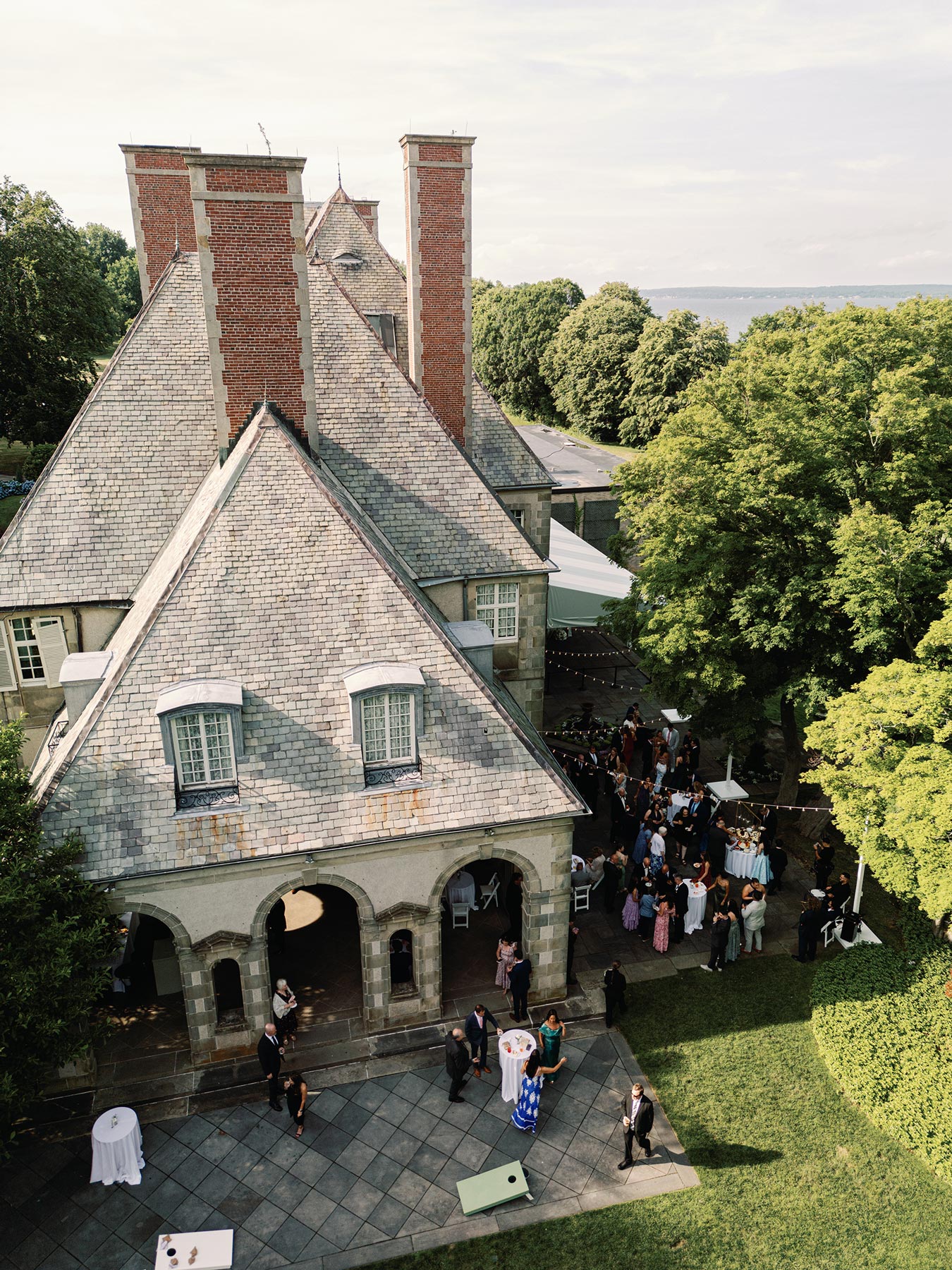
Some of my favorite venues have a separate space for cocktail hour. It creates a natural progression through the wedding day and gives the venue, planner, florist, and catering team time to finish the reception room without guests already sitting at the tables.
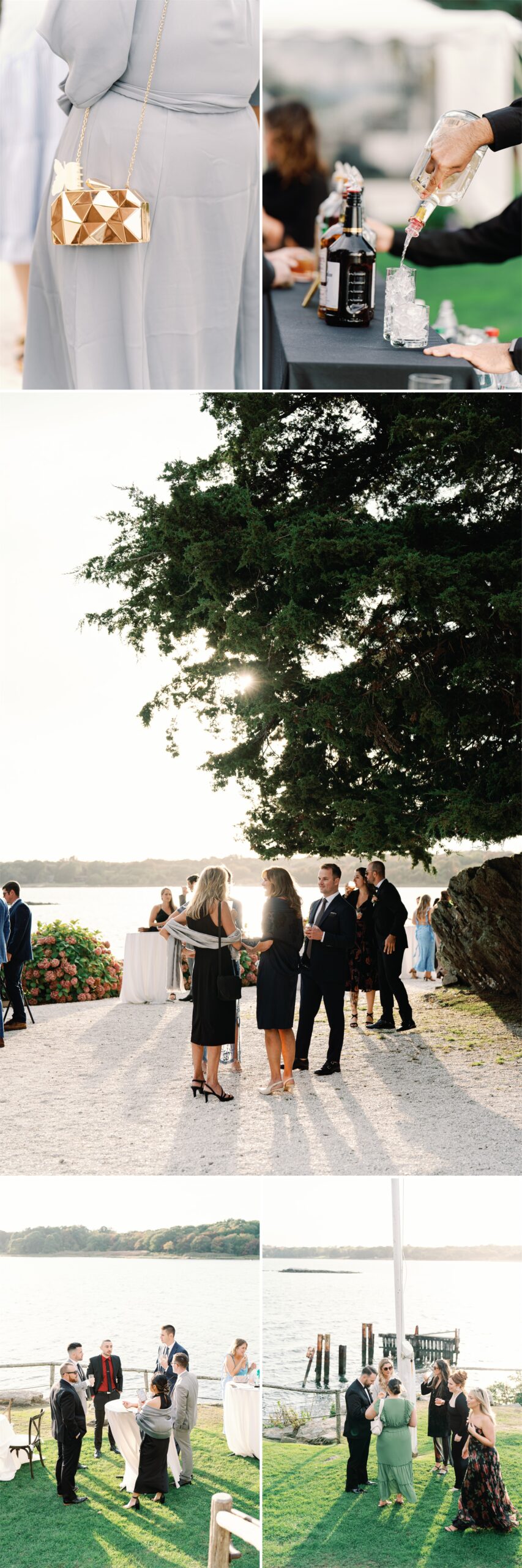
That matters when candles still need to be lit, place settings checked, or final design details adjusted. It also makes the reception reveal feel more intentional. Guests experience one atmosphere for cocktails and then enter a fully prepared room for dinner and dancing.
The transition does not have to involve two completely separate buildings. A terrace, lawn, library room, or connected indoor space can work beautifully. What matters is that cocktail hour has its own identity and that guests can move into dinner without confusion or a bottleneck.
Plan the Room Around a DJ or Band Before You Book
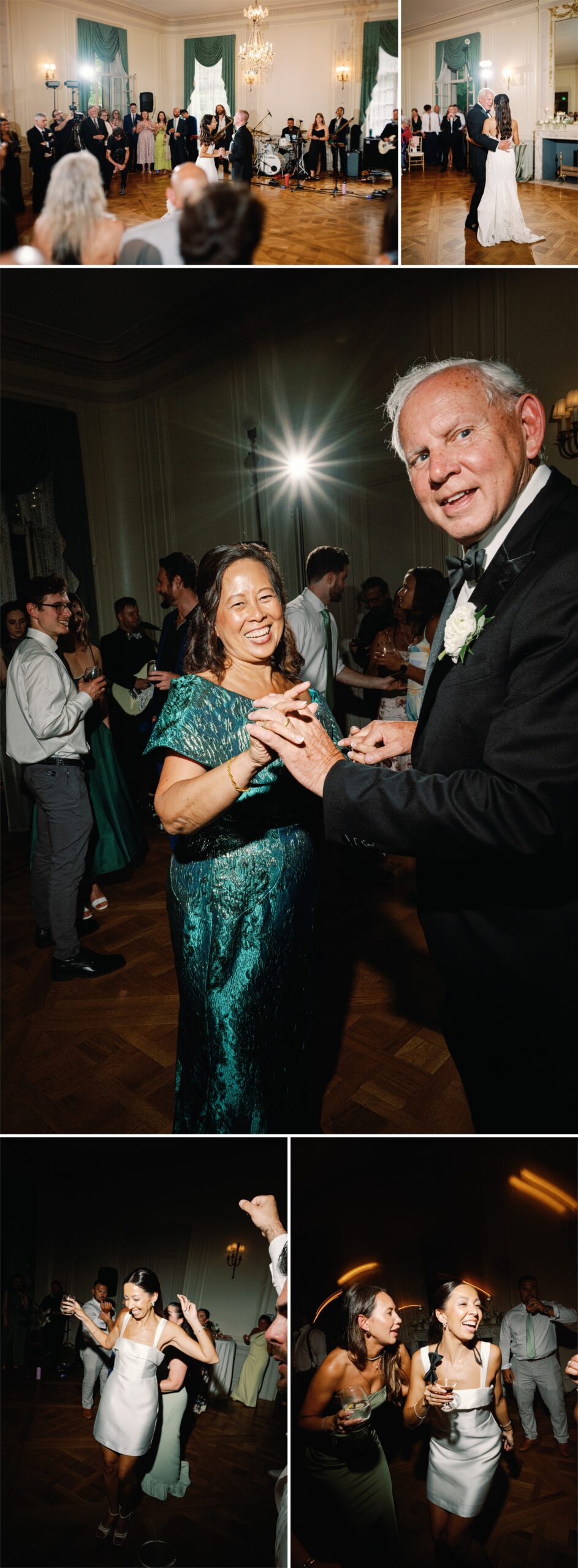
A DJ requires less room than a full band, but both need a thoughtful location, reliable power, and a clear relationship to the dance floor.
If you are considering a band, ask for the stage dimensions and power requirements before finalizing your layout. A band can take up considerably more space than a DJ, and that footprint may reduce table capacity or change the size and placement of the dance floor. For either option, confirm load-in access, sound restrictions, available circuits, speaker placement, and any venue cut-off times directly with the venue and entertainment company.
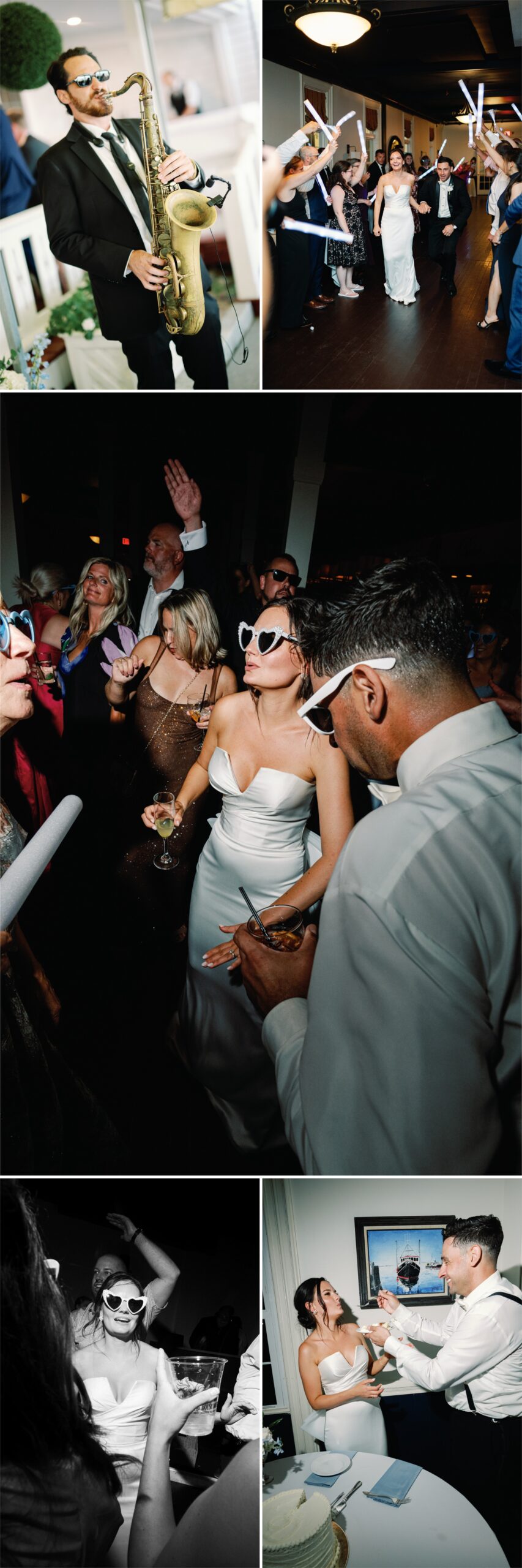
The goal is not merely to make everyone fit. The entertainment should feel integrated into the room and able to lead the party without blocking guest movement or sightlines.
Good Reception Photography Should Preserve the Atmosphere
Couples sometimes worry that a darker room, candlelight, a tent, or mixed lighting will prevent them from receiving clear reception photographs. It should not.
My experience with off-camera lighting allows me to walk into dark rooms and complicated lighting conditions with a plan. I can add the light needed to capture expressions, movement, and the energy of the dance floor without flattening the room or erasing the atmosphere the couple worked hard to create.
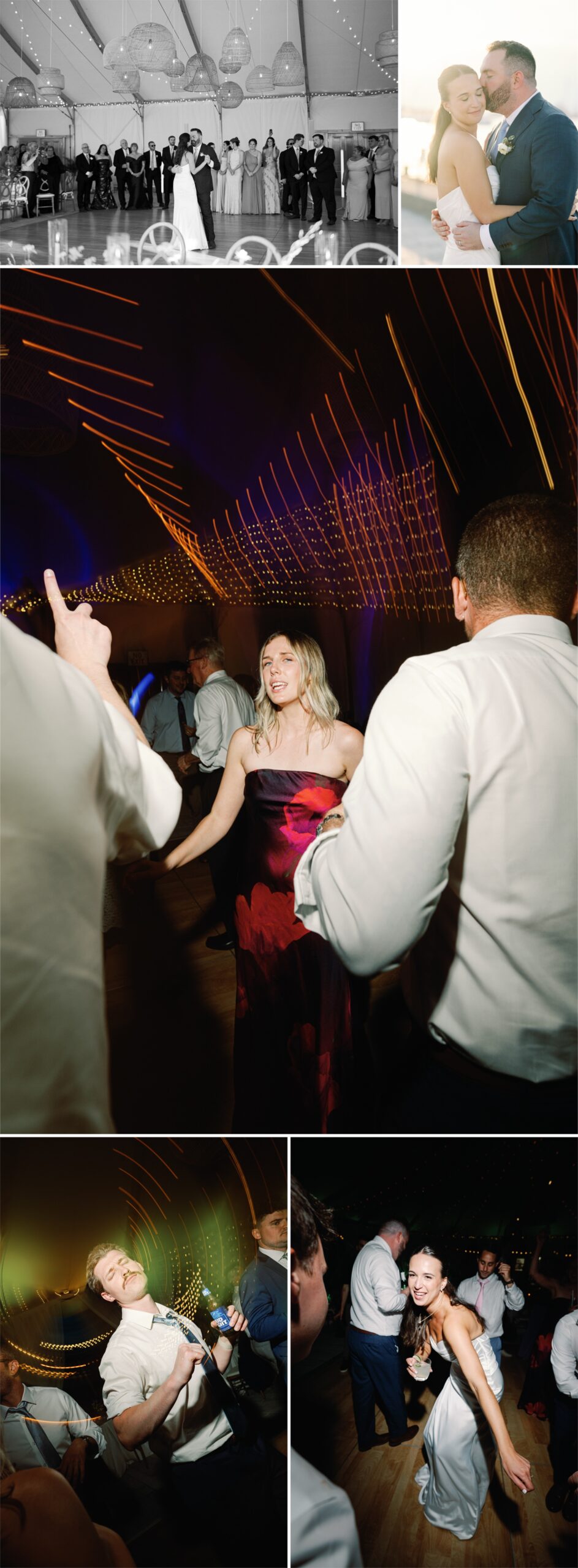
That means your candles can still feel like candles. Your dance floor can still feel dramatic. The photographs should preserve the mood of the night while keeping the people and moments clear.
Lighting choices still matter to the guest experience, though. Ask the venue whether house lights are dimmable, what existing fixtures remain on during dancing, and whether your entertainment or design team can add lighting. Those answers help everyone plan before the room is filled.
Outdoor Space Gives Guests a Second Experience
Patios, lawns, terraces, and waterfront spaces are especially valuable during Rhode Island summers. They give guests somewhere to cool off when the dance floor gets hot, have a quieter conversation, and enjoy the setting after dinner.
At a waterfront venue, the harbor or ocean remains part of the night instead of becoming only a ceremony backdrop. At a mansion or estate, an open lawn or terrace lets guests experience the grounds even after the formal portraits are finished.
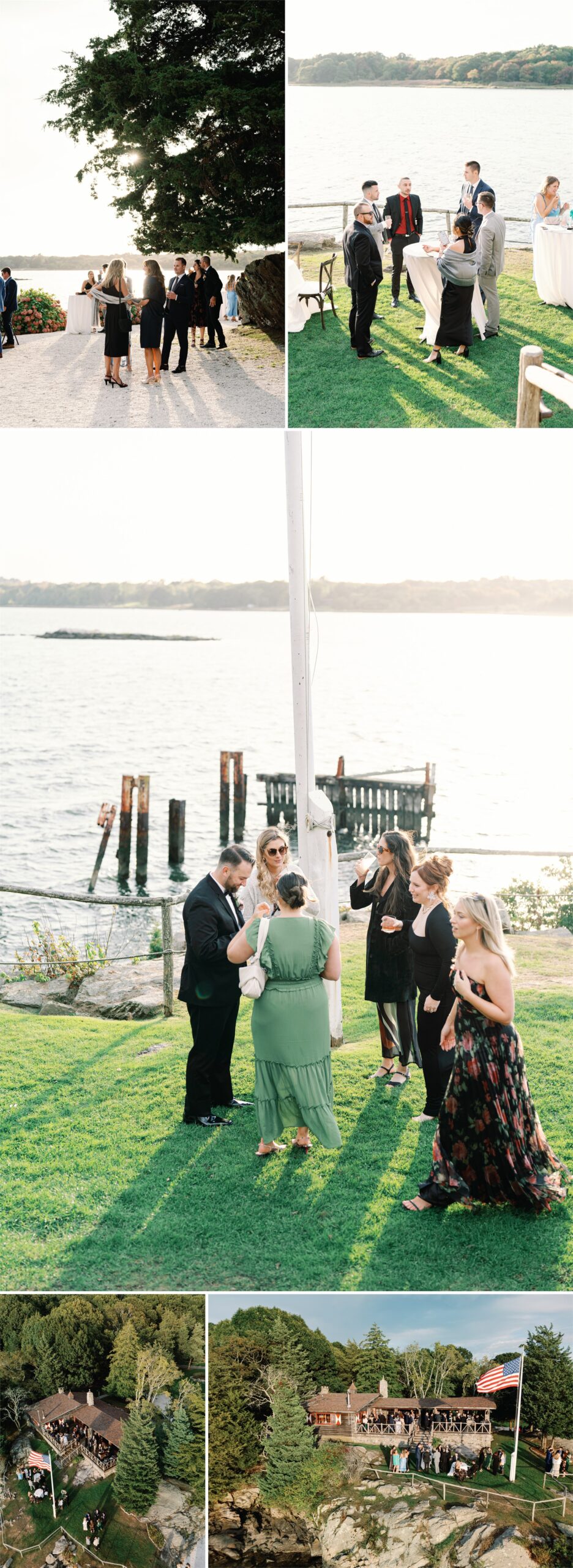
Pay attention to how the indoor and outdoor areas connect. If the patio is too far from the music, bar, or main room, the reception can split into two separate parties. The best layouts give guests breathing room without pulling them completely away from the celebration.
A Rain Plan Should Feel Like a Real Alternative
If any part of the wedding depends on an outdoor space, ask to see the rain plan during your venue tour. Do not settle for being told that an indoor option exists. Walk through it and picture your actual guest count, ceremony setup, cocktail hour, dinner, entertainment, and transitions inside that plan.
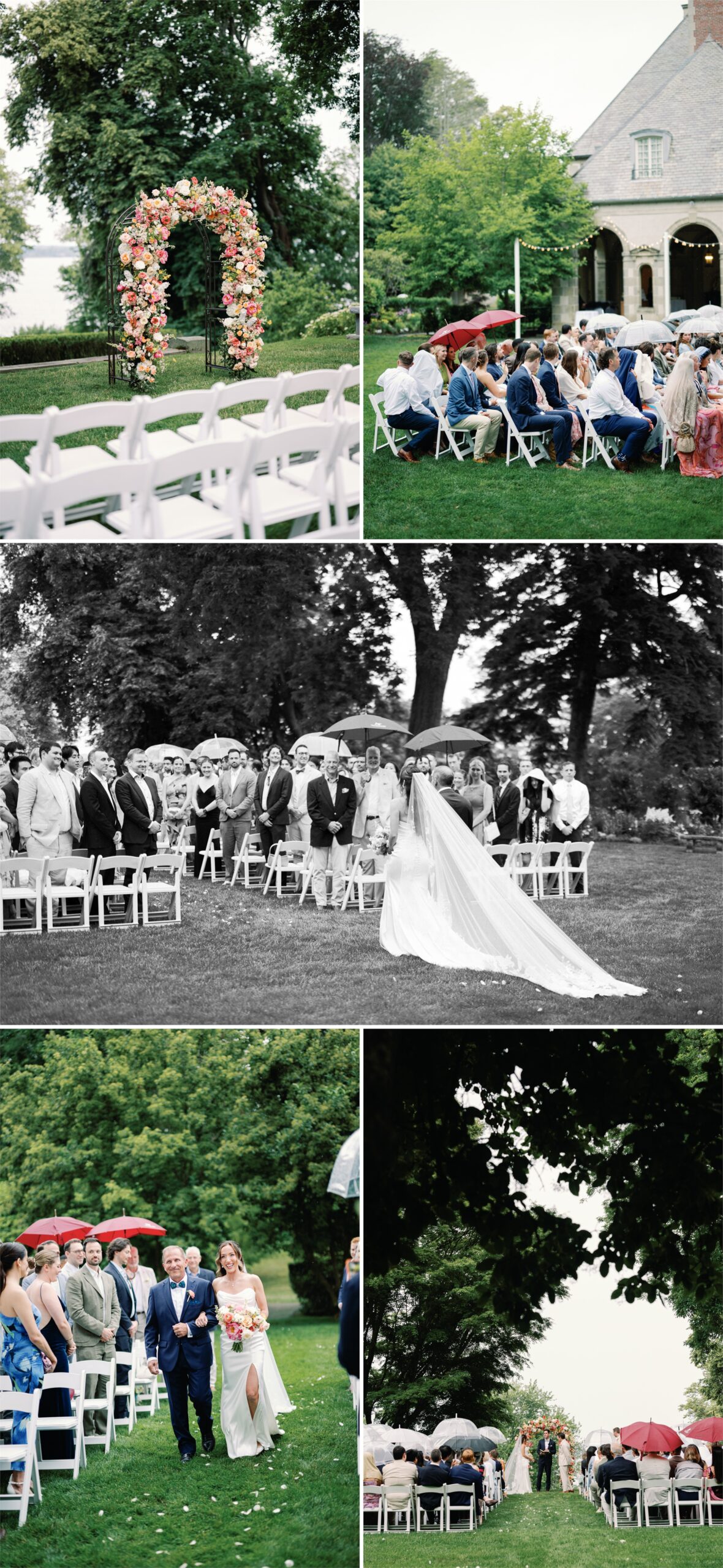
The right backup should preserve as much of your original experience as possible. Ask what changes when rain is forecast, when the decision must be made, who makes it, whether a tent requires an advance commitment, and how the floor plan changes indoors.
Venue policies and backup options can change, so these details should always be confirmed directly with the venue before booking.
Five Different Rhode Island Reception Experiences
These are a few of my favorite examples because each one shows a different kind of reception Rhode Island can offer.
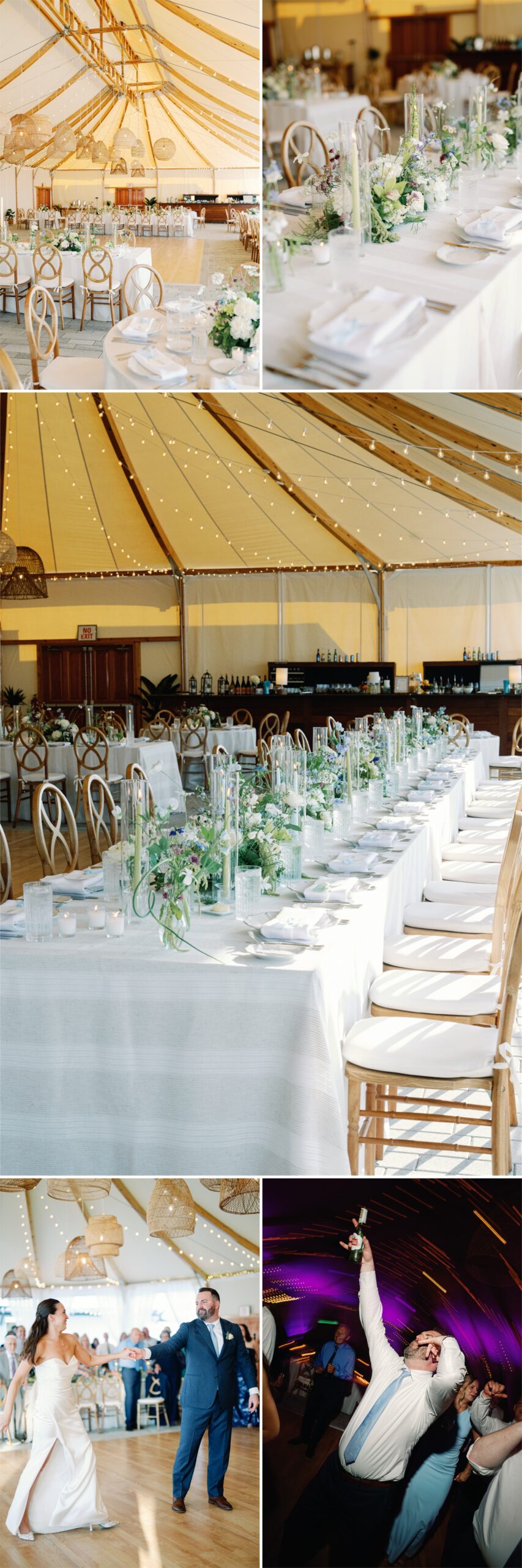
The Bohlin: A Newport Waterfront Reception
The Bohlin gives couples a true Newport harbor experience, with sailboats, docks, and the city close by. It is a strong example of how a waterfront setting can remain part of the reception after the portraits are finished. The outdoor surroundings give guests room to step away for a moment while the tented celebration keeps dinner and dancing connected.
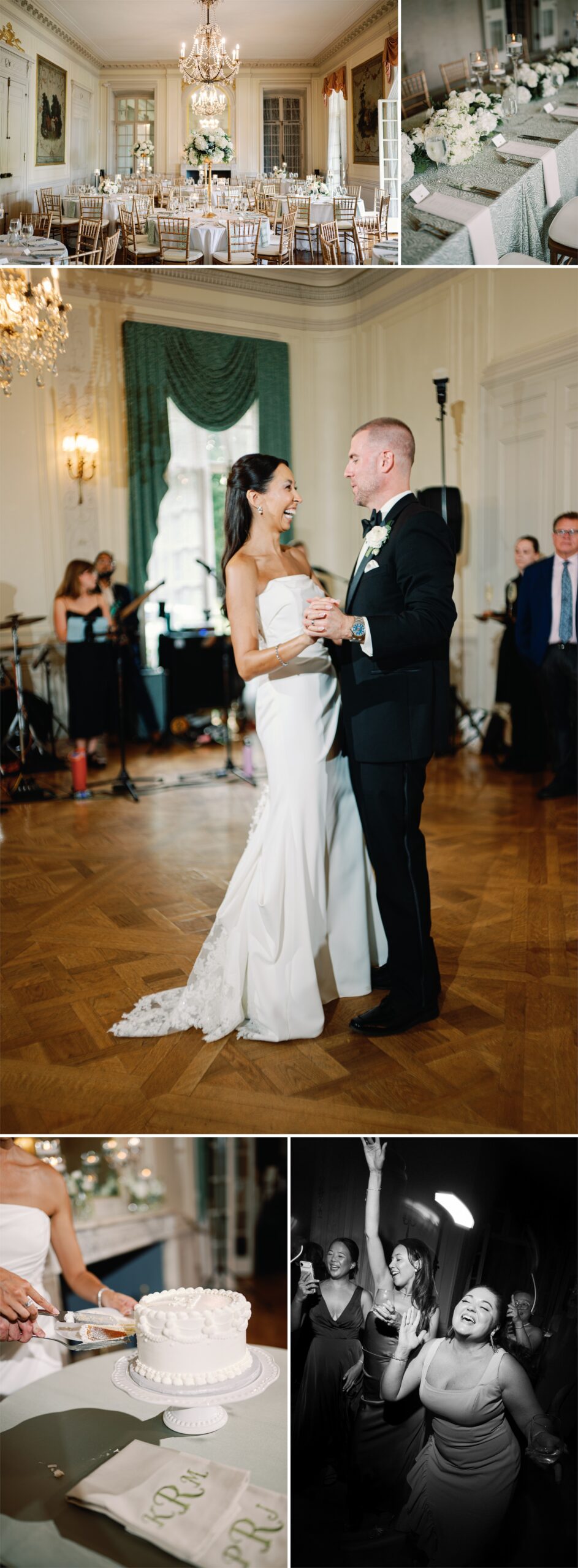
Glen Manor House: A Historic Mansion Celebration
Glen Manor House in Portsmouth combines the intimacy of a historic home with gardens and river views. Mansion venues require couples to think carefully about how guests will move through connected rooms and outdoor areas, but the right layout can feel warm, personal, and full of character rather than oversized. Whitney and Drago’s celebration is a great example of an elegant summer reception there.
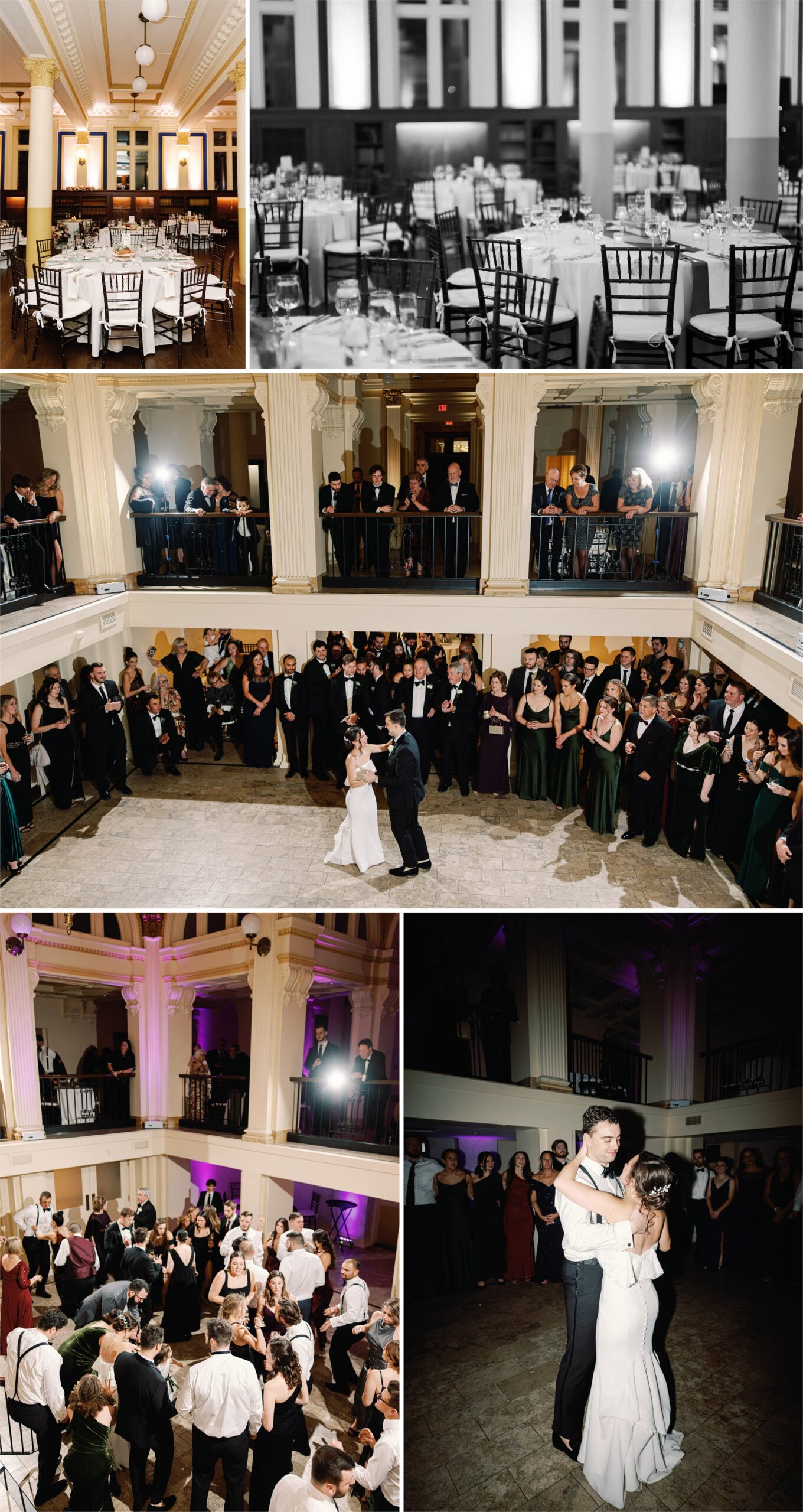
Providence Public Library: An Urban Reception With Character
Providence Public Library offers a completely different Rhode Island experience. Its architecture, interior spaces, and downtown setting make the reception feel rooted in the city. Erin and Andrew’s Providence Public Library wedding also showed how a live band and a full dance floor can bring historic rooms to life.
The library currently directs wedding and catered-event inquiries through its event partner, but couples should verify current catering, room-use, photography, and setup policies when they inquire.
Mount Hope Farm: A Tented Bristol Reception
Mount Hope Farm gives couples the open-air feeling of a coastal farm and estate wedding. At Cove Cabin, the lawn, water, cabin, and tent allow different parts of the celebration to have their own atmosphere while remaining connected. Taylor and Lucas’s Mount Hope Farm wedding is a useful example of cocktails on the lawn followed by a tented dinner and dancing.
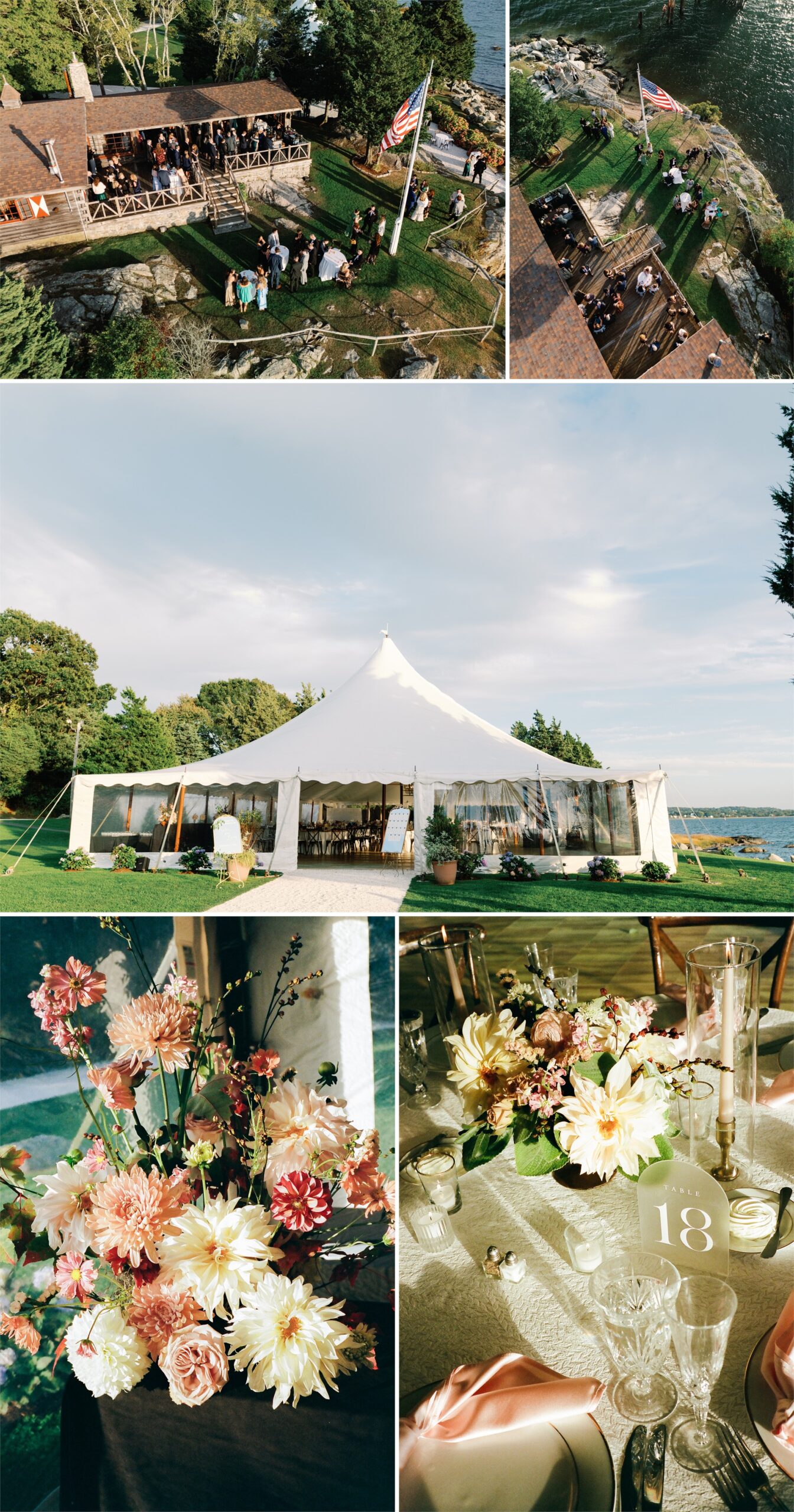
Spring House Hotel: A Block Island Wedding Weekend
Spring House Hotel turns the reception into part of a larger island experience. Guests are not simply arriving for dinner. They have traveled to Block Island and are sharing a full destination weekend. The lawns, ocean views, veranda, and indoor spaces can give the celebration several distinct chapters.
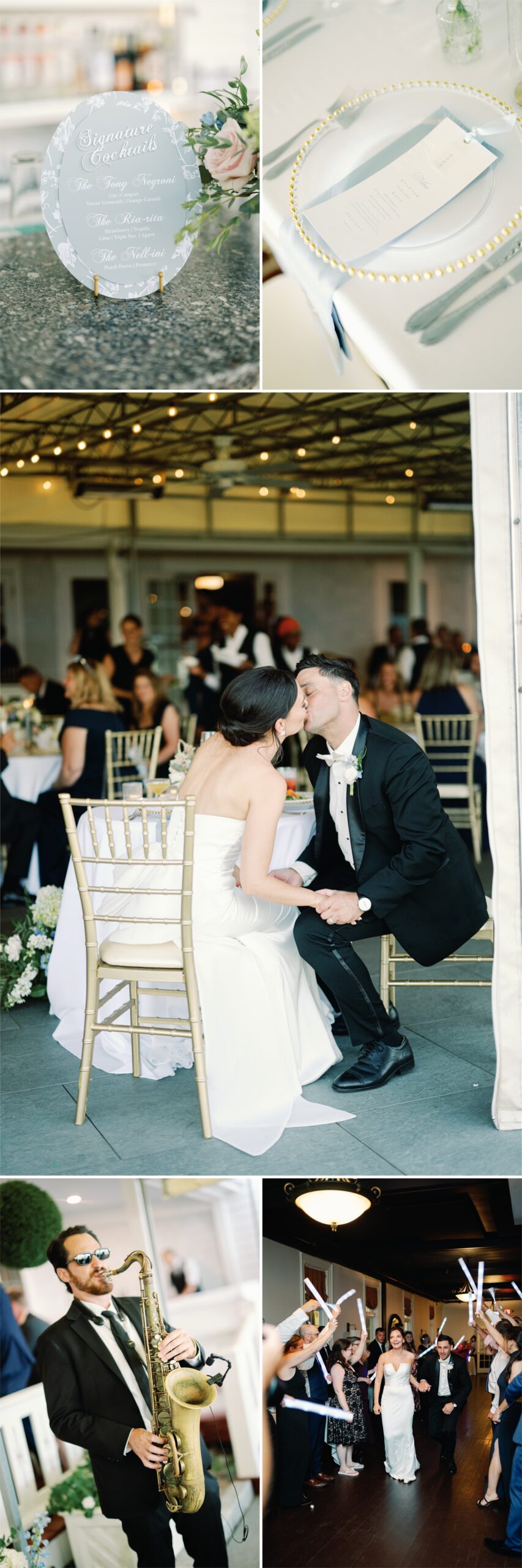
Island logistics and weather deserve extra attention, though. Ashley and Thomas’s Spring House wedding took place during Tropical Storm Ophelia, which made the importance of ferry timing, indoor alternatives, and flexible planning especially clear.
Plan Portraits Without Missing Your Own Reception
If spending time with guests is a priority, a first look is one of the most useful decisions you can make. It allows us to complete most couple portraits, wedding-party photographs, and immediate-family photographs before the ceremony.
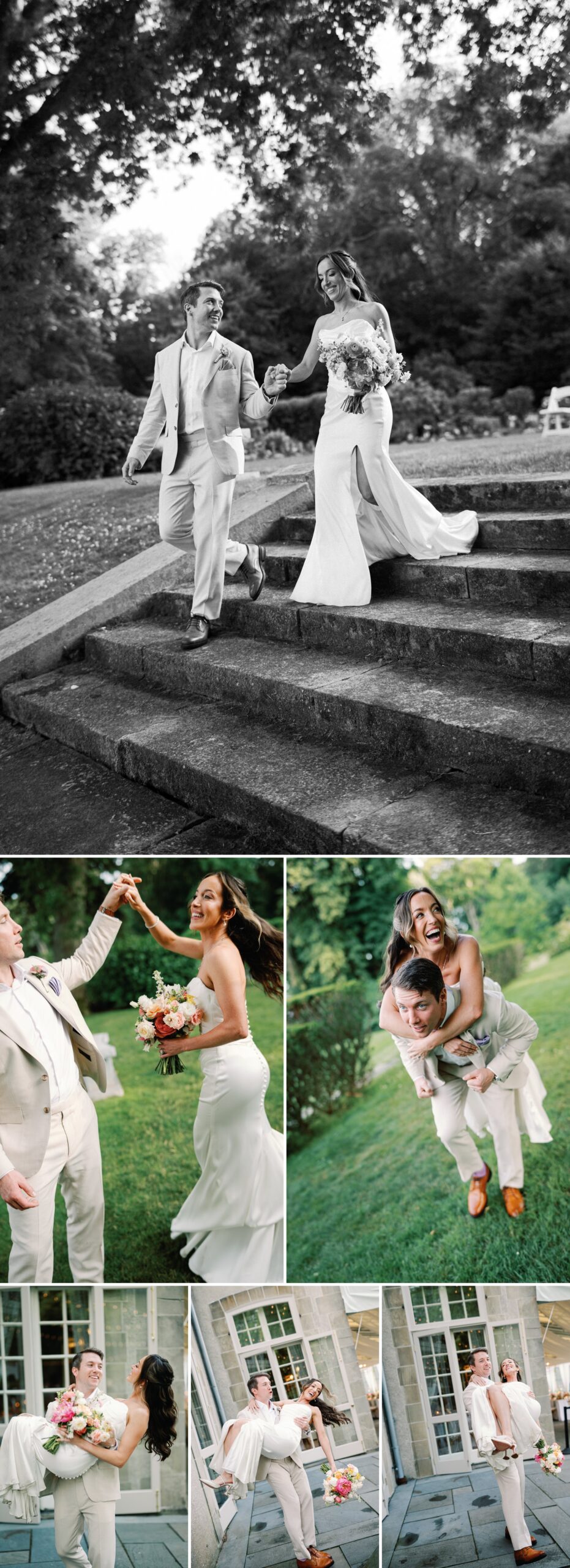
By the time cocktail hour begins, roughly 90 percent of the structured photography can already be finished. We may step away for a few minutes of sunset portraits, but you do not have to sacrifice the entire cocktail hour or disappear for a long portrait session after dinner.
Your reception should not feel like something happening while you are somewhere else taking photographs. A thoughtful timeline lets you enjoy it.
Questions to Ask During a Reception Venue Tour
Bring these questions with you when comparing wedding receptions in RI:
- What does the room look like with our expected guest count, not its maximum capacity?
- Can we see sample floor plans for a DJ and for a band?
- How large can the dance floor be with our preferred table layout?
- Where are the bar and restrooms in relation to the dance floor?
- Can seated guests see the entrances, dances, and speeches?
- Is cocktail hour held in a separate space?
- When can the reception team begin setup, and will setup continue while guests are present?
- What power, staging, load-in, and sound limitations apply to entertainment?
- Which house lights can be dimmed, and what additional lighting is permitted?
- How do guests move between indoor and outdoor spaces?
- What is the complete rain plan for our guest count?
- When must weather-related decisions be made, and who makes them?
- Are there restrictions or added costs for tents, heaters, generators, security, or extended hours?
- How much time is included for vendor setup and breakdown?
The venue should confirm its current capacity, policies, costs, rain plan, and technical requirements. My role is to help you think about how those answers will affect the flow of the day and the photographs you receive.
The Best Reception Space Is the One That Supports Your People
A reception room does not need to be the largest or most elaborate to create an incredible party. It needs to fit the people inside it, make the important moments easy to experience, and let the energy move naturally from dinner into dancing.
That is what I look for when photographing wedding receptions in RI. I want couples to have space to celebrate without feeling removed from their guests, and I want the photographs to preserve both the atmosphere they created and the people who filled it.
If you are planning a Rhode Island wedding and want photography that feels editorial, documentary, romantic, and genuinely fun, reach out and tell me what you are planning.


